
Private Lender vs. Bank: What Nassau & Suffolk Investors Actually Pay to Close
If you've been comparing hard money to a bank loan and stopping at the interest rate, you're only looking at half the picture. Rate matters. But for real estate investors on Long Island, the loan that costs less on paper isn't always the loan that gets you to closing.
Here's what actually separates a private lender from a bank in Nassau and Suffolk County, and what each one is really going to cost you.
| Comparison | Bank | Equiquest |
|---|---|---|
| Closing time | 30–45 days | Days, not weeks |
| Underwriting focus | Borrower’s credit, income, tax returns | Property value, deal, exit plan |
| Documentation | Extensive (W-2s, tax returns, DTI) | Minimal, deal-focused |
| Credit requirement | Strict minimums | Flexible, secondary to the deal |
| Best fit | Stabilized, long-hold properties | Time-sensitive, distressed, or competitive deals |
How Fast Can You Actually Close: Hard Money vs. Bank
Speed is the biggest structural difference between the two, and it's not a small one.
A bank loan on an investment property typically takes 30 to 45 days to close, sometimes longer if your file needs a second look. That timeline works fine for a stabilized rental purchase where you have room to wait. It does not work for a distressed property, an auction, or a seller who has three other offers on the table.
Equiquest closes in days, not weeks, because we're a direct lender using our own capital. There's no committee, no correspondent bank sign-off, no waiting on someone else's underwriting queue. We look at the deal and the property, and we move.
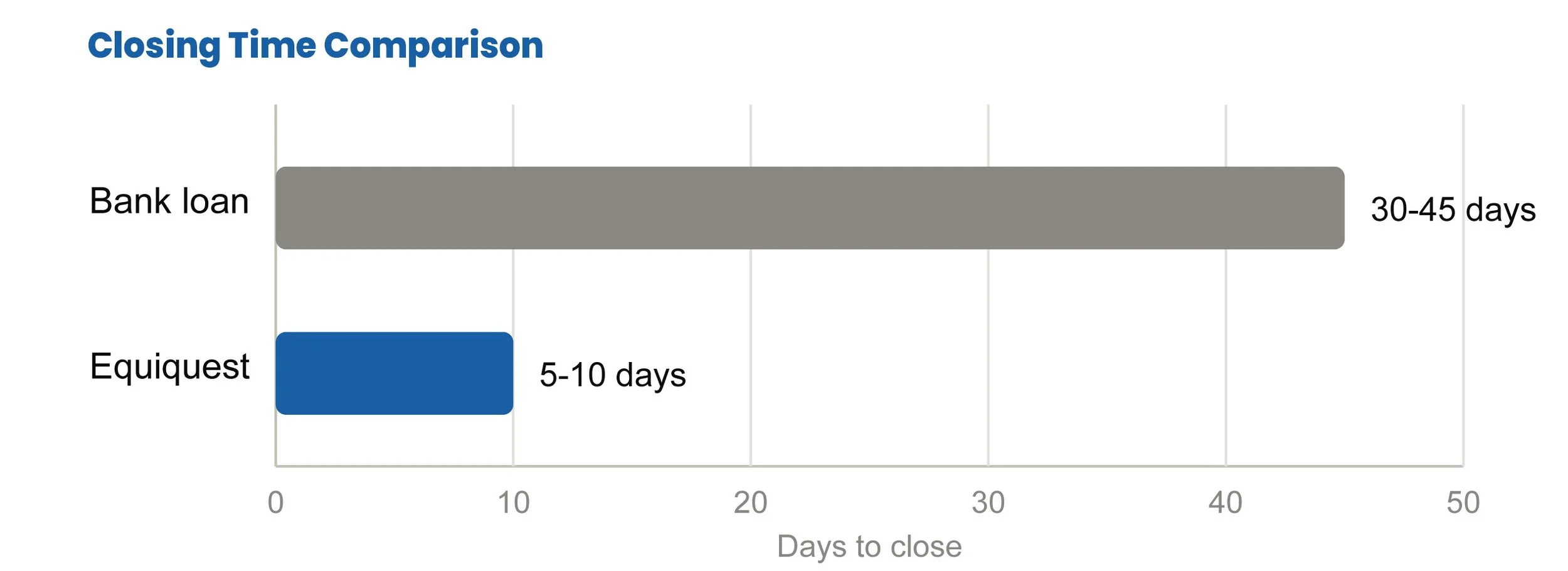
That speed is the whole reason hard money exists. If you've ever lost a deal because your bank needed "just a few more days," you already know what this is worth.
What Banks Require vs. What Equiquest Requires
Banks underwrite the borrower. We underwrite the deal.
A bank loan means tax returns, W-2s, debt-to-income calculations, and a credit review that can stall or kill your file over something that has nothing to do with the property itself. If you're self-employed, own multiple properties, or your income doesn't fit neatly into a bank's box, this is where most investors get stuck.
Equiquest looks at the property's value, the scope of work, and your plan to exit. Your credit history matters less than whether the numbers on the deal actually work. That's not a lower bar, it's a different bar, and it's built for investors instead of homeowners.
The Real Cost Comparison: Rate Isn't the Whole Story
Yes, a bank rate will usually beat a hard money rate on paper. But that comparison only tells you something if you actually close the deal.
Here's the math that gets skipped: say you're under contract on a property with $150,000 in built-in equity after rehab. A bank loan might save you a few thousand dollars in interest over a short hold period. But if that bank takes 45 days and the seller walks to a buyer who can close in two weeks, the interest you saved is worth nothing, because you don't have the deal anymore.
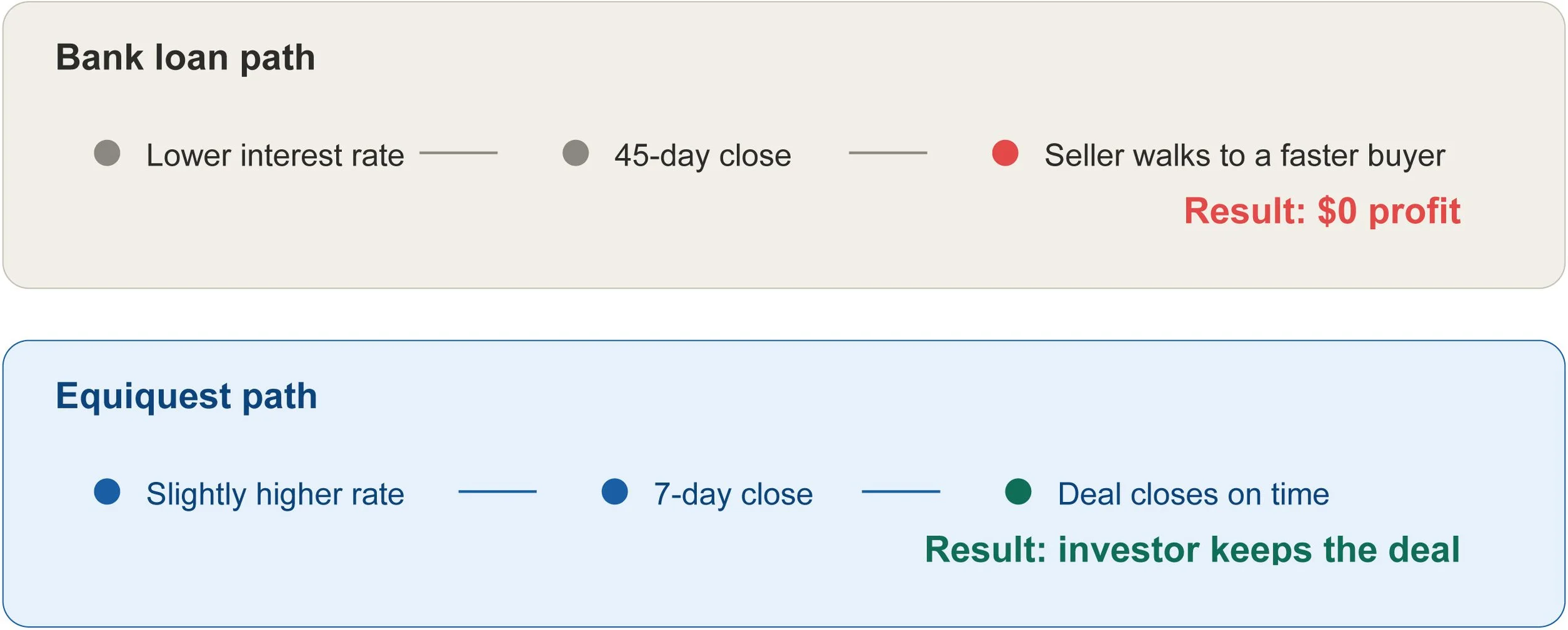
A slightly higher rate on a loan that actually funds beats a lower rate on a loan that doesn't close in time. That's not a sales pitch, it's just how the math works out on time-sensitive properties, which is most of what moves fast in Nassau and Suffolk right now.
When a Bank Loan Actually Makes More Sense
We're not going to tell you hard money is the right call every time, because it isn't.
If you're buying a stabilized rental with a long hold timeline, your income and credit are strong, and you have weeks to spare before you need to close, a bank loan or a DSCR product will likely cost you less over the life of the loan. Hard money is a tool for speed and flexibility, not a permanent financing strategy. Plenty of investors use both: hard money to acquire and renovate fast, then refinance into a bank loan once the property is stabilized.
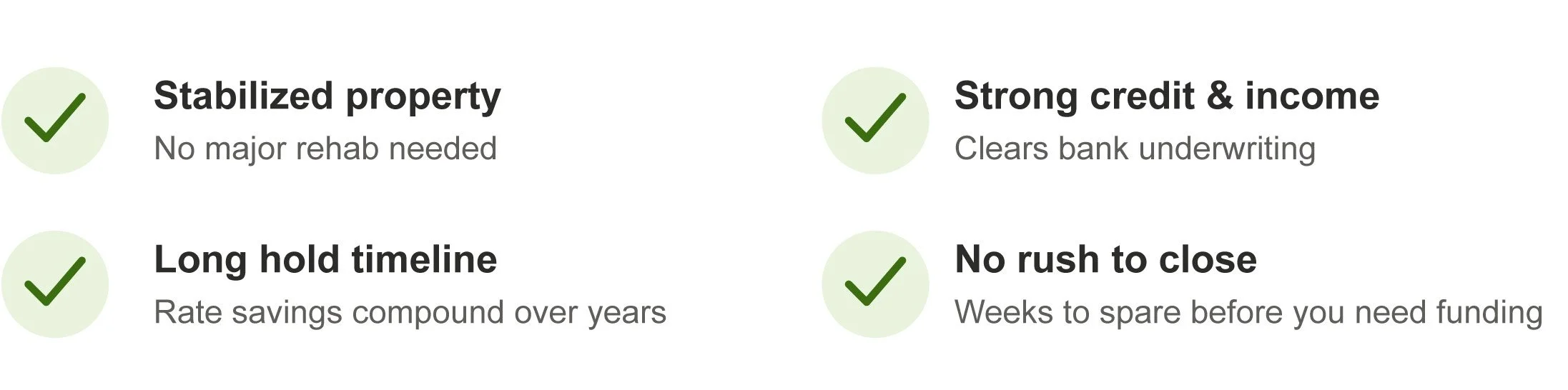
The real question isn't "which one is better." It's which one fits the deal you're actually trying to close.
Quick Answers
Is a hard money loan more expensive than a bank loan?
The rate is usually higher, but total cost depends on whether the deal closes and how long you hold the loan. Short-term, time-sensitive deals often come out ahead with hard money once you factor in what a slow close can cost you. Our deep financial understanding of deal financing helps clients reduce cash to close and total cost of the loan.
Do I need good credit to get a hard money loan from Equiquest?
No. We evaluate the property and the deal first. Credit isn't ignored, but it's not the deciding factor the way it is with a bank.
How fast can Equiquest actually close?
In days, not weeks. Exact timing depends on the deal, but we're built to move at the speed Nassau and Suffolk deals require.
Can I use hard money now and refinance into a bank loan later?
Yes, this is one of the most common strategies investors use. Close fast with hard money, stabilize the property, then refinance into longer-term bank or DSCR financing.